
O Level Accounting Books Available
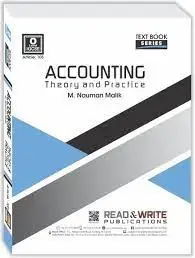
Accounting O Level Theory and Practice by Muhammad Nauman Malik Art #105
Original price was: ₨2,400.00.₨2,000.00Current price is: ₨2,000.00.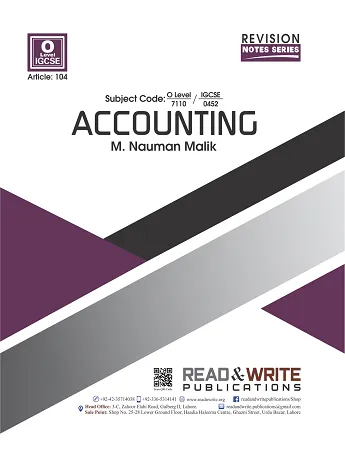
Accounting O Level/IGCSE Notes by Muhammad Nauman Malik Art #104
Original price was: ₨1,100.00.₨850.00Current price is: ₨850.00.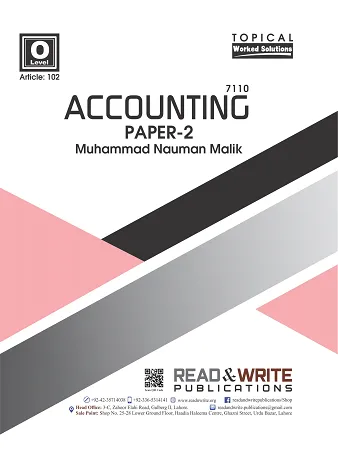
Accounting O-Level P2 Topical/Yearly Art #102
Original price was: ₨2,100.00.₨1,800.00Current price is: ₨1,800.00.
Accounting OLevel MCQ P1 Topical/Yearly Art #101
Original price was: ₨2,000.00.₨1,700.00Current price is: ₨1,700.00.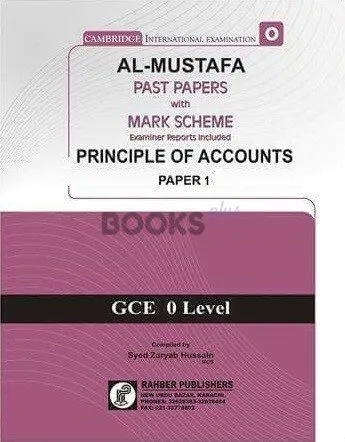
Al Mustafa O Level Principles of Accounts P1 Unsolved Upto Nov 2021
Original price was: ₨1,500.00.₨1,250.00Current price is: ₨1,250.00.
Al Mustafa O Level Principles of Accounts P2 Unsolved Upto Nov 2021
Original price was: ₨2,000.00.₨1,700.00Current price is: ₨1,700.00.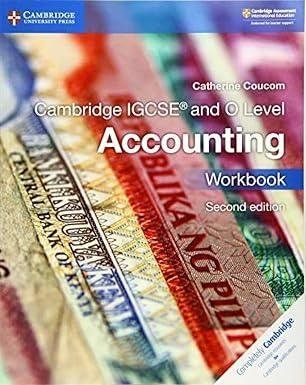
Cambridge IGCSE and O Level Accounting Workbook 2nd Edition
Original price was: ₨3,200.00.₨2,800.00Current price is: ₨2,800.00.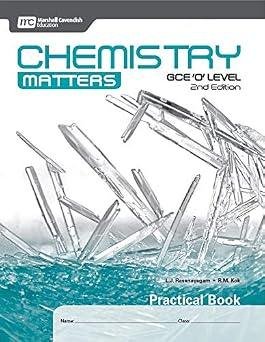
Chemistry Matters GCE O Level Practical Book 2nd Edition
Original price was: ₨1,200.00.₨1,000.00Current price is: ₨1,000.00.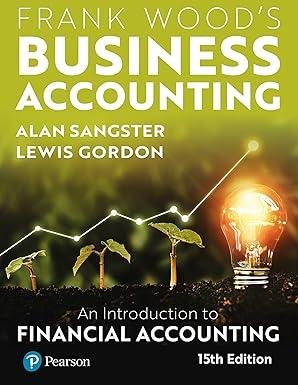
Frank Wood’s Business Accounting 15th Edition
Original price was: ₨2,200.00.₨1,800.00Current price is: ₨1,800.00.O Level Accounting Books in Pakistan — Cambridge O Level & IGCSE Preparation
O Level Accounting is where most Pakistani students encounter formal accounting for the first time. Double entry bookkeeping, financial statements, ledger accounts, trial balances — concepts that sound straightforward until you're sitting in an examination and a question asks you to prepare a full set of accounts from incomplete records or identify errors in a suspense account. The subject rewards careful systematic practice more than most O Level subjects. Students who understand the logic of double entry early in the course tend to find everything that comes after it considerably more manageable.
O Level Accounting — What Cambridge Tests
Cambridge O Level Accounting examinations test both theoretical understanding of accounting concepts and the practical ability to prepare accounting records and financial statements accurately. The calculation and preparation components are where most marks sit — understanding what accounts show and being able to produce them correctly under examination conditions.
Paper 1 is theory — multiple choice questions testing knowledge of accounting concepts, terminology, and principles. Not heavily calculation-based but requires precise understanding of what different accounting entries mean and why they're made. Students who understand the logic of accounting rather than just memorizing entries handle Paper 1 considerably better.
Paper 2 is the core of O Level Accounting — structured questions requiring preparation of ledger accounts, financial statements, and accounting records from given information. This is where the real marks are and where examination technique matters most. Presentation matters in accounting examinations — accounts need to be in the correct format, with correct headings, correct sides, and correct balancing. Students who know the right answer but present it incorrectly lose marks unnecessarily.
Double Entry — The Foundation Everything Builds On
Most students who struggle with O Level Accounting struggle because double entry bookkeeping didn't click properly early on. Every transaction has two effects — debit one account, credit another. That principle runs through every topic in accounting from basic ledger entries through to final accounts and beyond. Students who genuinely understand why every transaction creates two entries find topics like suspense accounts, correction of errors, and bank reconciliation considerably more logical than students who memorized entries without understanding the underlying principle.
Practicing double entry until it becomes automatic — rather than stopping once it seems clear — is what separates students who perform consistently well in accounting from those who understand it in class but lose marks under examination pressure.
Common O Level Accounting Topics That Catch Students
Depreciation consistently catches students who haven't practiced both methods — straight line and reducing balance — and understood what each one does to asset values over time. The journal entries for depreciation, accumulated depreciation accounts, and the effect on financial statements all need to be practiced rather than just read about.
Incomplete records — reconstructing full accounting records from partial information — is the topic that most students find hardest. It requires working backwards from available information to figure out what must have happened, which demands genuine understanding of how accounts work rather than following a memorized procedure.
Control accounts, bank reconciliation statements, and partnership accounts all appear consistently in Cambridge O Level Accounting past papers and all reward students who have practiced producing them in correct format under timed conditions.
O Level Accounting & A Level Accounting — The Natural Progression
Students who perform well at O Level Accounting and want to continue have a natural pathway into A Level Accounting — Cambridge A Level builds directly on O Level foundations and goes considerably deeper into management accounting, company accounts, and financial analysis. Our A Level Accounting section has past paper collections for students making that transition.
O Level Accounting & Business Studies — Related Subjects
O Level Business Studies and Accounting are frequently taken together — business studies covers the commercial and management context that accounting operates within, while accounting provides the financial detail that business decision-making depends on. Students taking both understand financial information in a more complete way than either subject provides alone. Our A Level Business Studies section has preparation material for students continuing both subjects at A Level.
Ordering — What to Know
Cash on delivery available across all cities in Pakistan — Karachi, Lahore, Islamabad, Peshawar, Quetta, Multan, Faisalabad and everywhere else. Dispatch within 2 to 3 working days. Returns within 7 days if something doesn't match your syllabus or examination session.
A Few Things Students Usually Ask
Is O Level Accounting hard? It requires systematic practice more than raw intelligence. Students who practice producing accounts in correct format consistently tend to perform well. Students who only read about accounting without practicing struggle under examination conditions.
Which topic is hardest in O Level Accounting? Incomplete records for most students — it requires working backwards from available information which demands genuine understanding of how accounts work.
Does O Level Accounting lead to A Level Accounting? Yes directly — Cambridge A Level Accounting builds on O Level foundations. Students with strong O Level preparation find the transition manageable.
COD available? Yes, all cities across Pakistan.
Call or WhatsApp: +92 302 1955110