
O Level English Books Available
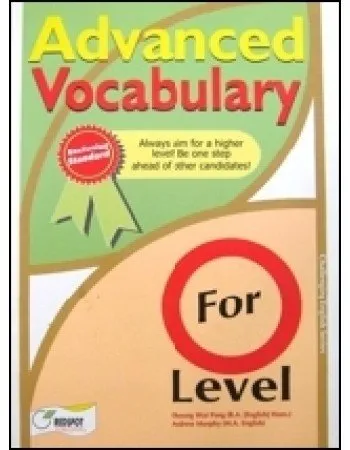
Advanced Vocabulary for O Level Latest Redspot
Original price was: ₨1,100.00.₨950.00Current price is: ₨950.00.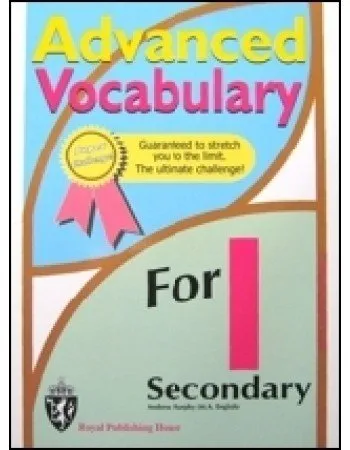
Advanced Vocabulary for Secondary 1 Latest Redspot
Original price was: ₨1,200.00.₨1,000.00Current price is: ₨1,000.00.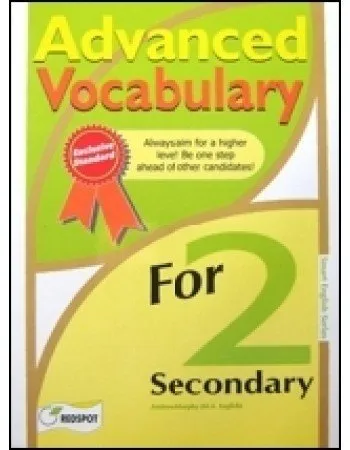
Advanced Vocabulary for Secondary 2 Latest Redspot
Original price was: ₨1,200.00.₨1,000.00Current price is: ₨1,000.00.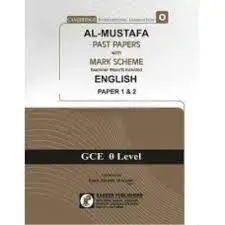
Al Mustafa O Level English P1 and P2 Unsolved Upto Nov 2021
Original price was: ₨2,800.00.₨2,500.00Current price is: ₨2,500.00.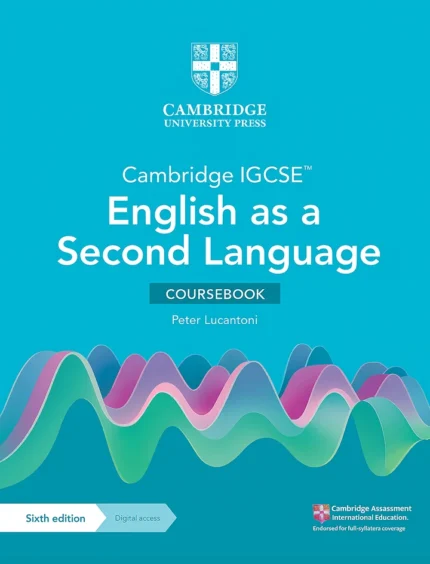
Cambridge IGCSE English as a Second Language Coursebook 6th Edition
Original price was: ₨4,500.00.₨2,850.00Current price is: ₨2,850.00.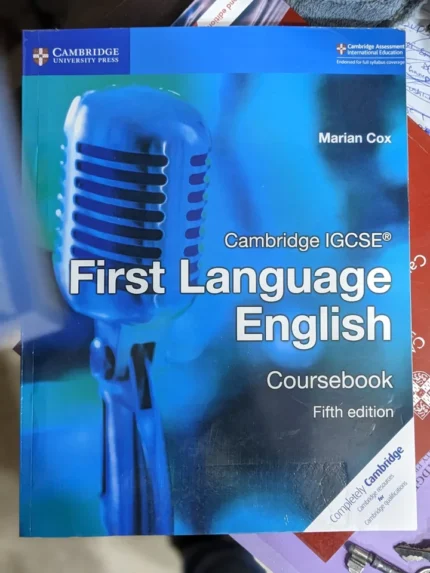
Cambridge IGCSE First Language English Coursebook 5th Edition
Original price was: ₨3,200.00.₨2,100.00Current price is: ₨2,100.00.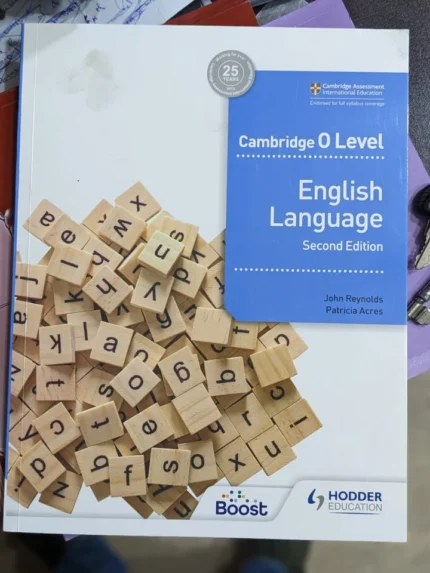
Cambridge O Level English Language 2nd Edition
Original price was: ₨3,500.00.₨2,100.00Current price is: ₨2,100.00.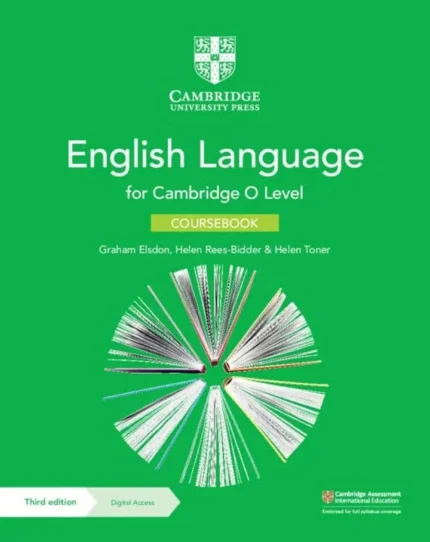
Cambridge O Level English Language Coursebook Third Edition
Original price was: ₨4,500.00.₨2,300.00Current price is: ₨2,300.00.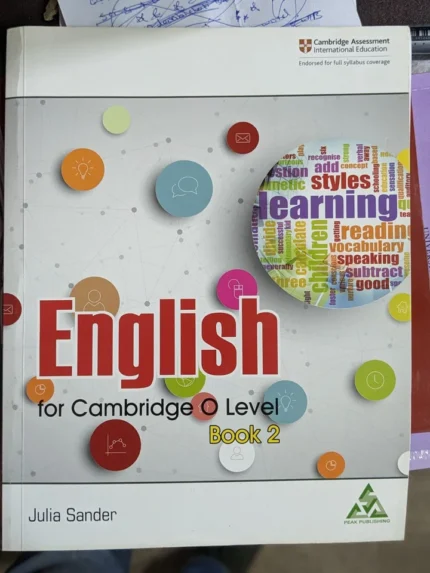
English for Cambridge O Level Student Book 2 by Julia Sander
Original price was: ₨3,200.00.₨1,950.00Current price is: ₨1,950.00.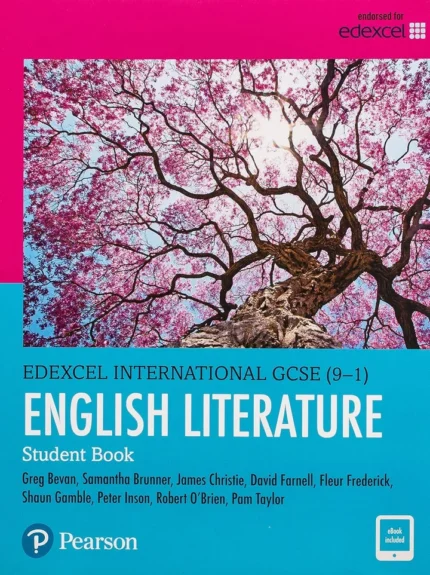
Pearson Edexcel International GCSE (9-1) English Literature Student Book
Original price was: ₨4,300.00.₨2,700.00Current price is: ₨2,700.00.O Level English Books in Pakistan — Cambridge O Level & IGCSE Preparation
Most Pakistani students preparing for Cambridge O Level English assume their school English is enough. For a few it is. For most it isn't — and they find out when marks come back lower than expected despite feeling confident going into the examination. Cambridge O Level English tests specific academic skills. Reading comprehension technique, directed writing format, composition structure — these need deliberate practice. General English ability developed through years of schooling doesn't automatically translate into Cambridge examination performance.
What the Papers Actually Test
Paper 1 has two sections. Reading comprehension first — passages with questions ranging from straightforward retrieval to inference and language analysis. Then directed writing — using information from the passage to produce a letter, report, speech, or article in a specified format for a specified audience.
Most students prepare for comprehension and neglect directed writing format. That's a mistake. Format marks in directed writing go before content marks — a letter needs an address, date, salutation, and appropriate closing. A report needs a title, headings, and formal register. A speech needs an opening address to the audience and a closing that acknowledges them. Students who write directed writing in essay format lose those marks regardless of how well they used the passage content.
Paper 2 is composition — two writing tasks from options including descriptive, narrative, argumentative, and discursive writing. Students choose which to attempt. Most choose their preferred type and never practice the others. Then examination options don't include their preferred type and they're stuck writing something they haven't practiced.
Where Comprehension Marks Actually Go
One-mark comprehension questions need one precise answer. Writing three sentences for a one-mark question earns one mark. It also wastes time that Paper 1 doesn't have much of.
Inference questions catch students who look for exact words from the passage. Inference means reading what the text implies — not what it literally states. "What does the writer suggest about..." requires interpretation, not retrieval. Students who look for the answer word-for-word in the passage consistently miss inference marks.
Language analysis questions — "explain the effect of the phrase..." — require explaining what the phrase suggests or implies, not naming a technique. "This is a metaphor" earns nothing. "The phrase suggests the character feels trapped, creating a sense of claustrophobia in the reader" earns marks. Effect first. Technique label optional.
Directed Writing — What Most Students Get Wrong
Content for directed writing tasks should come from the passage. Students who write from personal knowledge rather than selecting and reorganizing passage information miss the point of the task. The passage is provided for a reason — Cambridge wants to see whether students can extract relevant information and repurpose it for a different audience and format.
Audience matters. A letter to a local council reads differently from a letter to a friend. A speech to school students uses different language than a report to a board of directors. Students who write directed writing without adjusting register for the specified audience lose marks that format-aware students secure without extra effort.
Composition — What Cambridge Actually Rewards
Cambridge composition marking surprises a lot of students. Vocabulary isn't where most marks sit. Content and structure come first — having something interesting to say and organizing it clearly. A composition with simple language but genuine ideas and clear paragraphs outscores a technically correct but boring one. Students who spent months memorizing advanced vocabulary and ignored planning and structure find this out when results arrive. By then it's too late to fix.
Narrative writing rewards tension, character, and a satisfying ending — not just description of events in sequence. Descriptive writing rewards precise sensory detail — what something looks, sounds, smells, feels like specifically — not general statements about scenes. Argumentative writing rewards organized reasoning with clear paragraph structure and a conclusion that follows logically from the argument. Each type needs different technique and each needs practice separately.
Most students only practice the composition type they prefer. Cambridge examination options don't always include that type. Practicing all types during preparation removes that risk entirely.
Reading Habits That Help
Students who read English regularly — not just for school but novels, newspapers, articles — develop the reading stamina and vocabulary range that Paper 1 comprehension and Paper 2 composition both benefit from. Urdu readers who don't read much English outside school tend to find long comprehension passages tiring in examination conditions. Building the habit of reading English texts for longer periods without losing focus is preparation that doesn't look like examination practice but directly affects performance.
For students building both English and Urdu reading skills alongside Cambridge preparation, our O Level & IGCSE Books section has preparation material across language subjects.
O Level English to A Level
A Level English goes considerably deeper — literary analysis, language investigation, extended writing. Strong O Level foundations make A Level more manageable. Our A Level English section has preparation material for students making that transition.
Ordering
Cash on delivery across Pakistan — Karachi, Lahore, Islamabad, Peshawar, Quetta, Multan, Faisalabad, smaller cities too. Dispatch in 2 to 3 working days. Returns within 7 days if something doesn't fit.
Common Questions O Level English Students Ask
How do I improve comprehension marks? Practice with mark schemes — check what Cambridge actually awards marks for, not just whether your answer seems correct. Inference and language analysis questions specifically need this.
Which composition type should I choose? The one you can write most interestingly — not the safest one. Cambridge rewards engaging content alongside accurate language. Interesting writing scores better than safe writing.
Does O Level English help with other subjects? Yes — precise reading and structured writing support performance across every subject involving passages or extended answers.
COD available? Yes. All cities in Pakistan.
WhatsApp or call: +92 302 1955110