
O Level Islamiyat Books Available
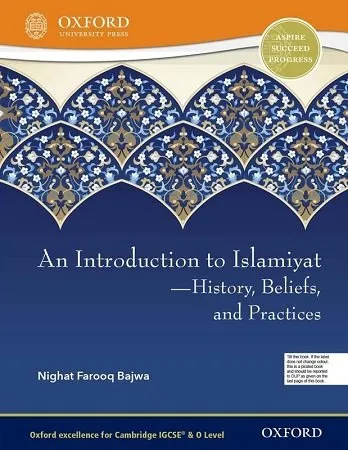
An Introduction to Islamiyat History, Beliefs, and Practices, Oxford
Original price was: ₨2,000.00.₨1,700.00Current price is: ₨1,700.00.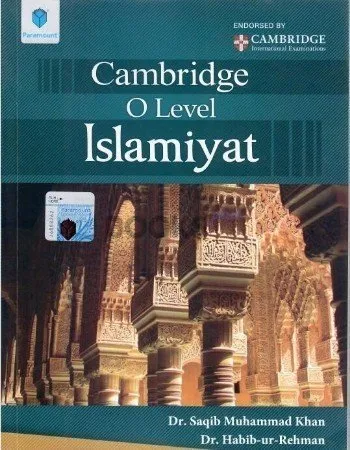
Cambridge O Level Islamiyat – Paramount Publishing
Original price was: ₨1,500.00.₨1,300.00Current price is: ₨1,300.00.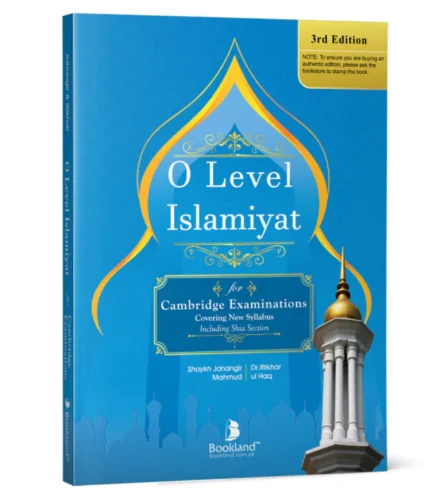
Cambridge O Level Islamiyat Bookland 3rd Edition
Original price was: ₨2,200.00.₨1,900.00Current price is: ₨1,900.00.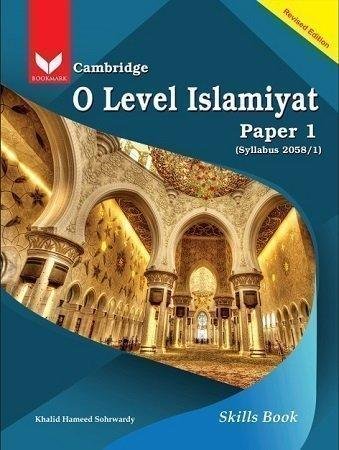
Cambridge O Level Islamiyat Skills Book for Paper 1 Revised Bookmark
Original price was: ₨1,700.00.₨1,500.00Current price is: ₨1,500.00.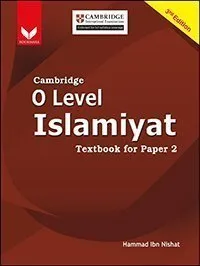
Cambridge O Level Islamiyat Textbook for Paper 2 3rd Edition Hammad Ibn Nishat Bookmark
Original price was: ₨2,800.00.₨2,500.00Current price is: ₨2,500.00.O Level Islamiyat Books in Pakistan — Cambridge O Level Preparation
Pakistani students taking O Level Islamiyat mostly assume their existing Islamic knowledge is enough. Years of school Islamic studies, madrasa background, family religious education — it all helps. But it doesn't automatically translate into Cambridge examination marks. Cambridge O Level Islamiyat tests precise specific knowledge — exact translation of Quranic passages, detailed chronology of the Prophet's life, specific terms and outcomes of historical events. General Islamic awareness isn't the same thing. Students who go in without targeted examination preparation find that out when results arrive.
What the Papers Test
Paper 1 is the life of the Prophet (PBUH) and the early Muslim community. Specific events, their causes, their outcomes, their significance. The chronology matters — not just that something happened but when, who was involved, what resulted, and why it mattered for the early Muslim community and for Islam broadly.
Cambridge Seerah questions go into specific detail that catches students off guard. Treaty of Hudaybiyyah — terms, companion reactions, long-term outcome. Constitution of Madinah — parties involved, what it actually established, why it mattered. These aren't vague questions about Islamic history. They're specific questions with specific mark allocations for specific details. Knowing these events happened isn't enough. Knowing the precise terms, the people involved, the immediate reactions, and the lasting significance — that's what earns marks.
Significance questions are where evaluation marks sit. Describing what happened earns some marks. Explaining why it mattered — for the early Muslims, for the spread of Islam, for Islamic law and practice today — earns the rest. Students who describe events without analyzing significance consistently finish below their actual historical knowledge.
Paper 2 covers Quran, Hadith, and Islamic practice. Translation questions require word-level accuracy — not paraphrase of general meaning. Students who understand what a passage means but translate loosely lose marks even when the understanding is correct. Practicing translation of set passages until accuracy is consistent is the only preparation that actually works here. Reading and familiarity aren't enough.
Commentary Questions — Three Things, Not One
Commentary questions in Paper 2 reward responses that address meaning, context, and significance separately. Most students merge all three into one paragraph and wonder why marks aren't higher.
What does the passage mean — the content. Where does it appear and why was it revealed — the context. What does it teach Muslims and how does it apply to Muslim life — the significance. These are three distinct questions that examination mark schemes treat separately. Addressing each one distinctly produces higher marks than combining them into undifferentiated general commentary.
Hadith — Teaching and Application Are Different Things
Students who can quote hadith accurately but can only explain what the hadith says — not what it teaches or how it applies — lose application marks consistently. The teaching of a hadith is one thing. Its practical implication for Muslim behavior in specific situations is another. Cambridge questions regularly separate these into distinct mark allocations. Students who treat them as the same thing leave marks behind on every hadith question.
Where Most Marks Get Lost
Seerah significance questions — describing events without analyzing why they mattered.
Quranic translation — loose paraphrase instead of precise word-level translation.
Commentary — merging meaning, context, and significance instead of addressing each separately.
Hadith application — explaining what the hadith says without explaining what it teaches or how it applies.
These four things come up across both papers and across multiple question types. Students who fix these specifically — through past paper practice with mark schemes — improve marks noticeably. Students who do more general revision without addressing these specifically tend to make the same mistakes in the actual examination.
O Level Islamiyat to A Level
A Level Islamiyat goes considerably deeper — Islamic thought, jurisprudence, and comparative religious study at a level that O Level doesn't approach. Students with precise O Level foundations find A Level more manageable than those who passed on general familiarity. Our A Level Islamiyat section has preparation material for students making that transition.
O Level Islamiyat and Urdu
Islamiyat and Urdu get taken together a lot among Pakistani Cambridge students. The overlap is genuine — classical Urdu poetry draws heavily on Islamic themes, and the literary tradition is deeply connected to Islamic thought and Persian literary culture. Students taking both find the subjects enrich each other in ways that aren't obvious when choosing subjects. Our O Level & IGCSE Books section has preparation material across subjects for students combining both.
Ordering
Cash on delivery across Pakistan — Karachi, Lahore, Islamabad, Peshawar, Quetta, Multan, Faisalabad, smaller cities too. Dispatch in 2 to 3 working days. Returns within 7 days if something doesn't fit.
Common Questions O Level Islamiyat Students Ask
Is general Islamic knowledge enough? No — Cambridge tests precise specific detail. General knowledge helps but targeted examination preparation is still necessary.
Which part of the paper is hardest? Depends on the student. Seerah chronology and significance for Paper 1. Quranic translation accuracy for Paper 2. Both need specific preparation rather than general Islamic revision.
Does it lead to A Level Islamiyat? Yes — A Level builds on O Level foundations and goes considerably deeper into Islamic thought and jurisprudence.
COD available? Yes. All cities in Pakistan.
WhatsApp or call: +92 302 1955110