
O Level Mathematics Books Available
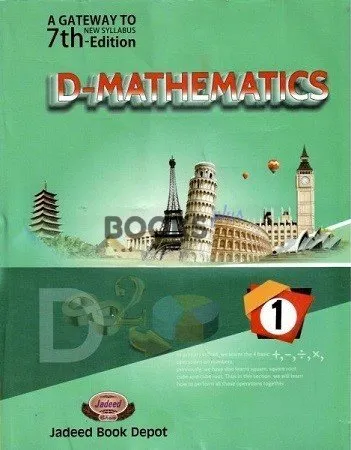
A Gateway to New Syllabus D-Mathematics 1 D1 7th Edition
Original price was: ₨1,200.00.₨1,000.00Current price is: ₨1,000.00.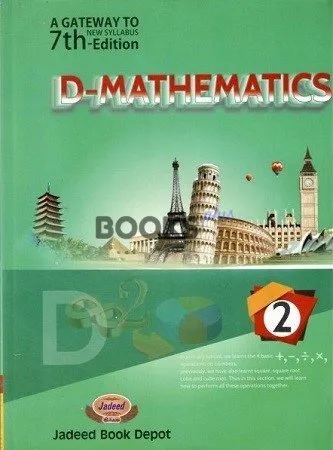
A Gateway to New Syllabus Mathematics D2 7th Edition
Original price was: ₨1,400.00.₨1,100.00Current price is: ₨1,100.00.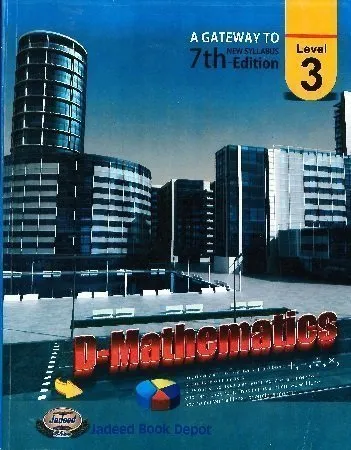
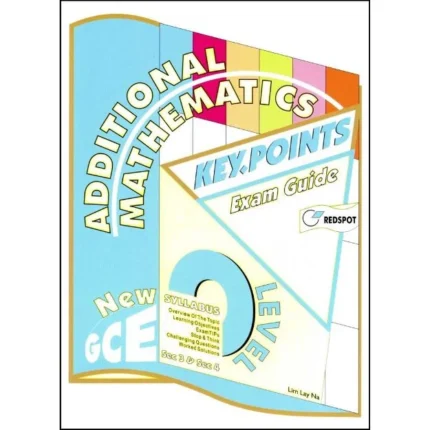
Additional Mathematics Key Points O Level Redspot
Original price was: ₨1,250.00.₨1,050.00Current price is: ₨1,050.00.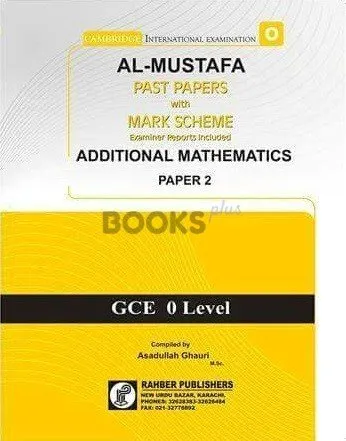
Al Mustafa O Level Add Math P2 Unsolved Upto Nov 2021
Original price was: ₨2,200.00.₨1,900.00Current price is: ₨1,900.00.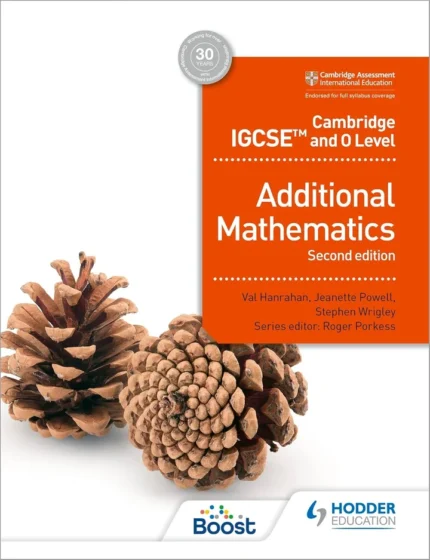
Cambridge IGCSE & O Level Additional Mathematics 2nd Edition Hodder
Original price was: ₨4,500.00.₨2,250.00Current price is: ₨2,250.00.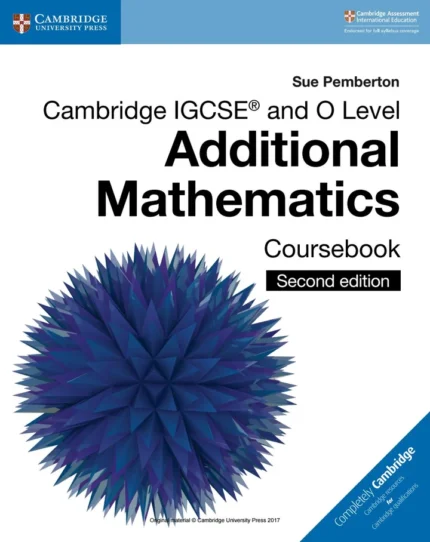
Cambridge IGCSE and O Level Additional Mathematics Coursebook 2nd Edition
Original price was: ₨4,000.00.₨2,350.00Current price is: ₨2,350.00.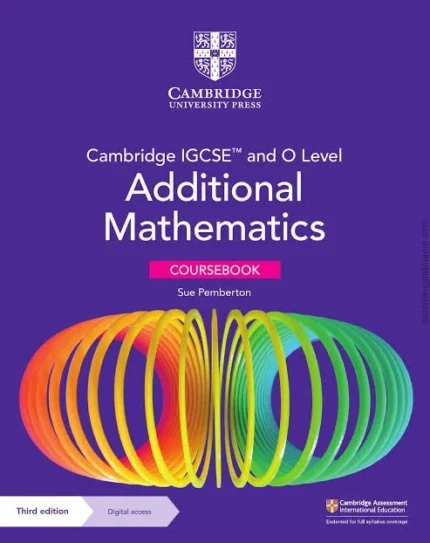
Cambridge IGCSE and O Level Additional Mathematics Coursebook 3rd Edition
Original price was: ₨4,500.00.₨3,100.00Current price is: ₨3,100.00.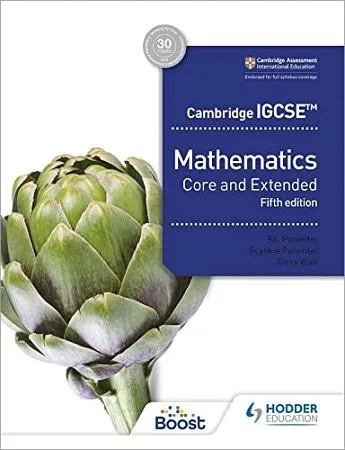
Select options
This product has multiple variants. The options may be chosen on the product page
Cambridge IGCSE Mathematics Core and Extended Coursebook 3rd Edition
Price range: ₨3,799.00 through ₨10,150.00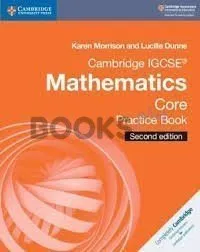
O Level Mathematics Books in Pakistan — Cambridge O Level & IGCSE Preparation
O Level Mathematics is the subject that determines more about a Pakistani student's academic future than almost any other. Not just the grade — the actual mathematical understanding built at this stage. Students who develop genuine mathematical reasoning at O Level find A Level Mathematics, engineering entrance tests, MDCAT quantitative sections, and university mathematics considerably more manageable. Students who passed O Level Mathematics through pattern recognition and formula memorization without understanding tend to hit walls at every subsequent stage that requires the same foundations.
What Cambridge O Level Mathematics Actually Tests
Cambridge O Level Mathematics 4024 — two papers, broad syllabus. Number, algebra, geometry, mensuration, trigonometry, statistics, probability. More topics than most students manage to cover properly if serious preparation starts too late in the year.
Paper 1 is non-calculator — shorter questions, no calculator allowed, testing mathematical reasoning and mental arithmetic alongside written methods. Students who rely on calculators for basic arithmetic find Paper 1 harder than their mathematical knowledge warrants. Fraction calculations, percentage problems, and basic algebraic manipulation all appear in Paper 1 in formats that require clean working without computational assistance.
Paper 2 is calculator allowed — longer structured questions testing deeper mathematical problem solving across all topic areas. The longer questions have multiple parts that build on each other — students who make errors early in a question lose subsequent marks even when their method for later parts is correct. Checking working before moving forward matters more in Paper 2 than in most examinations.
Algebra — Where Pakistani Students Lose Most Marks
Algebraic manipulation is the topic that most consistently separates O Level Mathematics grades in Pakistan. Expanding brackets, factorizing expressions, solving simultaneous equations, manipulating formulae — these skills run through every other algebra topic and through geometry and trigonometry applications as well.
Students who can't manipulate algebra fluently find that errors accumulate across questions — a sign error in expanding brackets produces a wrong equation, which produces a wrong solution, which loses multiple marks on a question where the method was actually understood. Algebraic fluency — getting the manipulation right consistently rather than occasionally — only develops through sustained practice, not through understanding the concept once and moving on.
Quadratic equations catch many students — factorizing quadratics, completing the square, and using the quadratic formula all appear in past papers and each requires a different approach depending on the form of the equation. Students who only know one method and try to apply it to every quadratic encounter problems when the preferred method doesn't work cleanly for a particular equation.
Geometry and Trigonometry — Applied Not Just Memorized
Geometry questions in Cambridge O Level Mathematics require applying geometric reasoning to unfamiliar configurations — not just recognizing standard shapes. Circle theorems, similar triangles, and geometric proof questions specifically test whether students understand why geometric relationships hold rather than whether they've memorized which theorem applies to standard diagrams.
Circle theorem questions particularly catch students who memorized theorem statements without understanding the reasoning behind them. When examination questions present unfamiliar circle configurations — angles in different positions, chords intersecting in unusual ways — students who only recognized standard diagrams get stuck. Students who understood why each theorem works can reason through unfamiliar configurations.
Trigonometry — sine rule, cosine rule, bearings, angles of elevation and depression — appears consistently in Paper 2 longer questions. The calculation chain in trigonometry questions means that rounding intermediate answers incorrectly produces wrong final answers even when the method is correct. Cambridge mark schemes specifically instruct students to carry full calculator values through calculations and only round at the final answer — students who round at each step consistently accumulate errors.
Statistics and Probability — The Section Students Rush
Statistics and probability questions appear in every O Level Mathematics past paper and are consistently the section students prepare least thoroughly. Mean, median, mode from frequency tables, cumulative frequency curves, histograms, probability calculations, and tree diagrams all appear regularly.
Cumulative frequency questions specifically require careful reading of scales and accurate plotting — errors in reading axes produce wrong values for median and quartiles even when the method is understood. Histogram questions require understanding that frequency density rather than frequency goes on the vertical axis — a distinction that catches students who haven't encountered this before.
Probability tree diagrams reward systematic working — writing probabilities on branches, multiplying along branches, adding between branches. Students who try to calculate combined probabilities mentally rather than drawing complete tree diagrams make errors that systematic diagram working would have avoided.
Showing Working — Non-Negotiable in Cambridge Mathematics
Cambridge O Level Mathematics mark schemes award method marks for correct working even when arithmetic errors produce wrong final answers. Students who do correct working mentally and write only the answer lose method marks they should have secured. This happens consistently — students who understand the mathematics but don't show working score lower than students with weaker understanding who show their method clearly.
The habit of showing all working — every step, every intermediate calculation — needs to become automatic before the examination. Students who develop this habit during practice carry it into the examination naturally. Students who only show working when they remember to forget steps under examination pressure.
O Level Mathematics & Physics — Natural Combination
Mathematics and Physics at O Level complement each other directly — calculation methods, algebraic manipulation, and graph interpretation all appear in Physics in ways that strong Mathematics preparation supports. Students taking both find mathematical skills transfer directly to Physics problem solving. Our O Level & IGCSE Books section has preparation material across science subjects for students combining Mathematics with sciences.
O Level Mathematics to A Level
A Level Mathematics builds directly on O Level foundations — calculus, advanced algebra, mechanics, and statistics all require solid O Level mathematical foundations. Students who genuinely understood O Level Mathematics find A Level considerably more manageable. Students who passed O Level through pattern recognition tend to struggle when A Level requires genuine mathematical reasoning. Our A Level Mathematics section has past paper collections for students making that transition.
Ordering — What to Know
Cash on delivery available across all cities in Pakistan — Karachi, Lahore, Islamabad, Peshawar, Quetta, Multan, Faisalabad and everywhere else. Dispatch within 2 to 3 working days. Returns within 7 days if something doesn't match your syllabus or examination session.
Common Questions O Level Mathematics Students Ask
Which topic needs the most practice? Algebra — it runs through every other topic. Students who can't manipulate algebra fluently accumulate errors across the entire paper.
How do I improve my Paper 1 performance? Practice arithmetic without a calculator regularly. Basic fraction, percentage, and algebraic calculations need to be fast and accurate without computational assistance.
Does O Level Mathematics help with A Level? Yes directly — A Level builds on O Level foundations throughout. Strong O Level preparation makes A Level considerably more manageable.
COD available? Yes, all cities across Pakistan.
Call or WhatsApp: +92 302 1955110