
O Level Physics Books Available
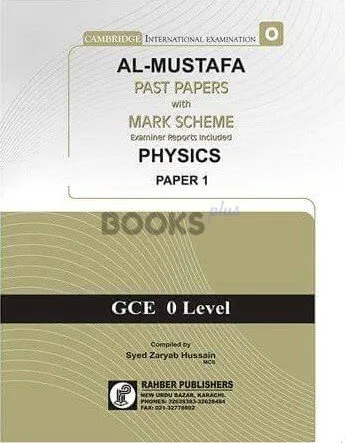
Al Mustafa O Level Physics P1 Unsolved Upto Nov 2021
Original price was: ₨1,700.00.₨1,500.00Current price is: ₨1,500.00.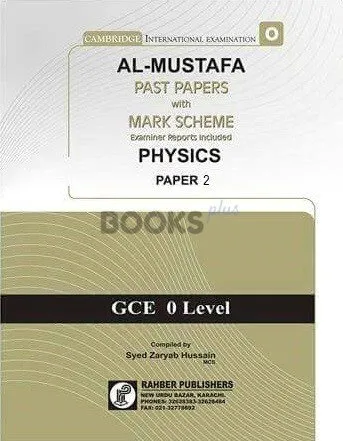
Al Mustafa O Level Physics P2 Unsolved Upto Nov 2021
Original price was: ₨2,200.00.₨2,000.00Current price is: ₨2,000.00.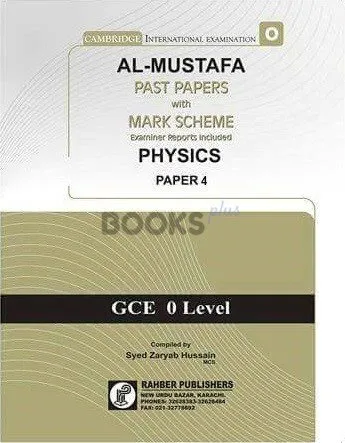
Al Mustafa O Level Physics P4 Unsolved Upto Nov 2021
Original price was: ₨1,600.00.₨1,400.00Current price is: ₨1,400.00.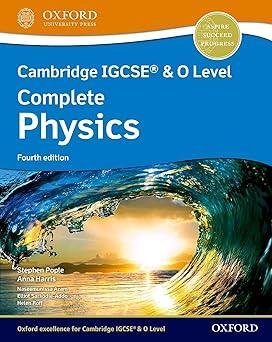
Cambridge IGCSE & O Level Complete Physics Student Book Fourth Edition
Original price was: ₨2,600.00.₨2,300.00Current price is: ₨2,300.00.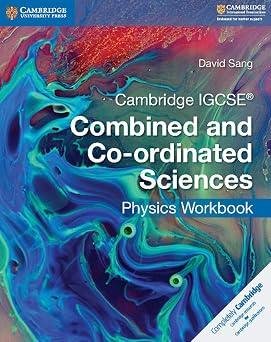
Cambridge IGCSE Combined and Co-ordinated Sciences Physics Workbook
Original price was: ₨2,500.00.₨2,200.00Current price is: ₨2,200.00.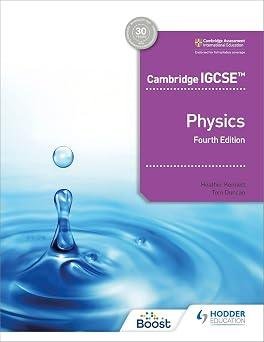
Select options
This product has multiple variants. The options may be chosen on the product page
Cambridge IGCSE Physics 4th Edition Hodder
Price range: ₨2,100.00 through ₨4,900.00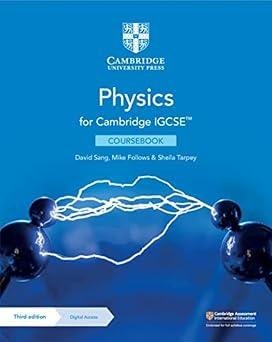
Select options
This product has multiple variants. The options may be chosen on the product page
Cambridge IGCSE Physics Coursebook 3rd Edition
Price range: ₨2,260.00 through ₨7,900.00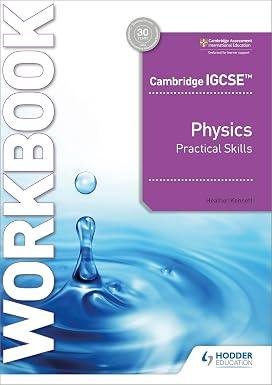
Cambridge IGCSE Physics Practical Skills Workbook Hodder
Original price was: ₨2,700.00.₨2,350.00Current price is: ₨2,350.00.
Cambridge IGCSE Physics Practical Workbook with Digital Access Third Edition
Original price was: ₨3,000.00.₨2,500.00Current price is: ₨2,500.00.
Cambridge IGCSE Physics Workbook 3rd Edition
Original price was: ₨2,700.00.₨2,500.00Current price is: ₨2,500.00.
Cambridge IGCSE Physics Workbook Hodder 3rd Edition
Original price was: ₨2,400.00.₨2,150.00Current price is: ₨2,150.00.
Cambridge O Level Physics Coursebook
Original price was: ₨1,700.00.₨1,550.00Current price is: ₨1,550.00.O Level Physics Books in Pakistan — Cambridge O Level & IGCSE Preparation
O Level Physics is where Pakistani students either build a genuine science foundation or develop habits that cause problems at every subsequent stage. Students planning A Level Physics, engineering entrance tests, or any technical degree need what O Level Physics builds — not just the grade but the actual understanding of physical concepts and their mathematical application. Students who passed O Level Physics through formula memorization and past paper pattern recognition without understanding the underlying physics find A Level and university physics considerably harder than their O Level grade suggested.
What Cambridge O Level Physics Actually Tests
Two papers and a practical component. Measurement, motion, forces, energy, thermal physics, waves, light, sound, electricity, magnetism, atomic physics, space physics — broad syllabus. More than most students cover properly if preparation starts late.
Paper 1 is 40 MCQs. No partial credit. Questions don't ask for definitions — they present situations and ask what happens, why it happens, or what should be done. Students who understood the physics work through unfamiliar scenarios. Students who memorized facts get stuck when the question doesn't look exactly like what they revised. Same topic, different angle — and the marks go to understanding, not recognition.
Paper 2 is structured questions — calculations, explanations, and data interpretation. Most marks sit here. Calculation questions require showing working clearly — Cambridge Physics mark schemes award method marks even when arithmetic errors produce wrong final answers. Students who do correct calculations mentally and write only the answer lose method marks unnecessarily. Units matter too — Cambridge specifically penalizes missing or incorrect units in ways that FSc marking doesn't, which catches Pakistani students who haven't adjusted their working style.
Paper 3 is alternative to practical — questions about experimental procedures, measurement techniques, safety, and data analysis. Gets the least preparation time from most students. Shows in results. Understanding how physics experiments are actually designed — why certain instruments are used, what sources of error exist, how readings should be taken to minimize uncertainty — requires specific preparation that reading theory alone doesn't provide.
The Explanation Question Problem
Same pattern appears in Physics as in Chemistry and Biology. Students describe outcomes instead of explaining mechanisms. Cambridge Physics mark schemes specifically reward mechanism-level explanations and the mark difference is significant.
"The wire gets hotter when more current flows" — outcome. Partial marks.
"Increasing current increases the rate of collision between free electrons and positive ions in the lattice, transferring more energy to the lattice per unit time, increasing the temperature of the wire" — mechanism. Full marks.
Practicing explanation questions specifically — with mark schemes, checking whether answers address mechanism or just outcome — is the only preparation that fixes this consistently. Reading theory doesn't. Doing more past papers without specifically targeting explanation technique doesn't either.
Calculations — Where Method Marks Matter
Physics calculation questions in Paper 2 have method marks separate from accuracy marks. Correct method with arithmetic error — method marks secured, accuracy mark lost. Correct answer with no working shown — accuracy mark only, method marks lost. Students who show complete working consistently outperform students who do correct calculations without showing steps.
The habit needs to be automatic — every calculation, every intermediate step, units at every stage. Students who develop this during practice carry it into the examination without thinking about it. Students who only show working when they remember to get inconsistent marks across calculation questions.
Topics That Come Up Most in Past Papers
Forces and motion — Newton's laws, velocity-time graphs, momentum — appear consistently. Velocity-time graph questions test both graph reading and calculation — gradient for acceleration, area for distance. Students who practice both types of graph question perform consistently on these. Students who only practiced one type get caught when the other appears.
Electricity — Ohm's law, series and parallel circuits, resistance calculations — appears in almost every past paper in multiple question formats. Circuit calculations require systematic working through — students who try to calculate equivalent resistance of complex circuits in their heads make errors that written step-by-step working would have avoided.
Waves — reflection, refraction, diffraction, the electromagnetic spectrum — appears with diagram questions that require precise drawing. Reflected rays at correct angles, refracted rays bending the right direction, diffraction patterns drawn correctly — marks go to precision here, not just general understanding.
Thermal physics — specific heat capacity, specific latent heat, gas laws — involves calculation questions where formula selection matters. Students who know which formula applies to which situation and can substitute correctly perform well. Students who confuse specific heat capacity and specific latent heat calculations lose marks on questions where the distinction matters.
O Level Physics & Mathematics — Essential Connection
Physics and Mathematics at O Level are inseparable in practice — algebraic manipulation, graph interpretation, trigonometry for vectors, and statistical reasoning all appear in Physics in ways that strong Mathematics preparation directly supports. Students who are genuinely strong at Mathematics find Physics calculations considerably more manageable. Our O Level Mathematics section has preparation material for students combining both subjects.
O Level Physics & Engineering Pathways
Students planning engineering degrees at Pakistani universities — NUST, UET, GIKI, NED — need O Level Physics as a foundation that A Level Physics and engineering entrance tests build on directly. The conceptual understanding and calculation habits developed at O Level determine how manageable everything that comes after feels. Students who built genuine understanding at O Level move through A Level and entrance test preparation faster. For students planning medical careers where physics appears in MDCAT, our medical books section has preparation material that builds on the physics foundations O Level develops.
O Level Physics to A Level
A Level Physics goes considerably deeper — waves, fields, nuclear physics, and quantum phenomena all at a level that requires genuine O Level understanding rather than surface familiarity. Students with strong O Level foundations find A Level more manageable. Our A Level Physics section has past paper collections for students making that transition.
Ordering — What to Know
Cash on delivery available across all cities in Pakistan — Karachi, Lahore, Islamabad, Peshawar, Quetta, Multan, Faisalabad and everywhere else. Dispatch within 2 to 3 working days. Returns within 7 days if something doesn't match your syllabus or examination session.
Common Questions O Level Physics Students Ask
Which topic needs the most preparation? Electricity and forces and motion appear most consistently across past papers. Both reward systematic calculation working and understanding of mechanisms rather than memorized formulas.
How do I improve on explanation questions? Write mechanism-level answers — what happens at the particle or energy level and why. Outcome descriptions earn partial marks at best.
Does O Level Physics help with engineering entrance tests? Yes directly — the conceptual foundations and calculation habits built at O Level carry through A Level and engineering entrance test preparation.
COD available? Yes, all cities across Pakistan.
Call or WhatsApp: +92 302 1955110